
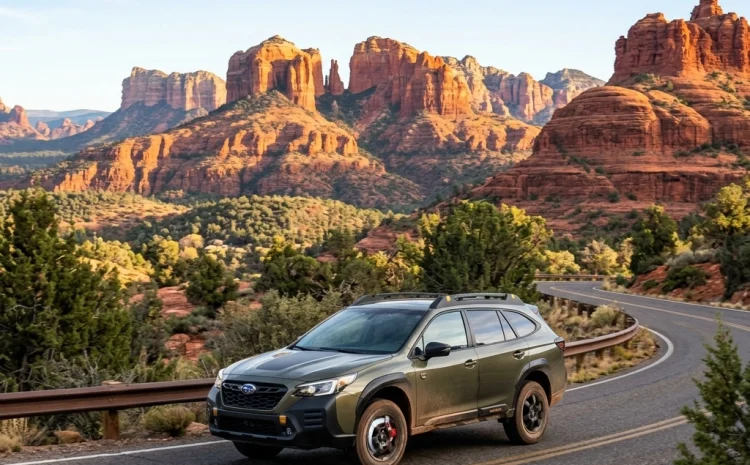
Do You Really Need a Brake Replacement in Sedona? Here’s the Truth
Look, we get it. Nobody wakes up on a beautiful Saturday morning in Sedona, looks at the Red Rocks, and thinks, “Man, I really hope I get to spend my afternoon sitting in an auto shop waiting for a brake job.”
Brake repairs have a bit of a reputation. For many drivers, the "Brake Light" on the dashboard feels like a "Give Us Your Wallet" light. You start wondering: Is that squeak actually a problem, or is it just Sedona dust? Is the mechanic being straight with me, or are they just looking to hit a monthly quota?
At Sedona Oil & Lube, we’ve been answering these questions for 30 years. We’ve seen the good, the bad, and the "how-is-this-car-still-stopping" ugly. Because we value honesty above a quick buck, we’re going to pull back the curtain. Here is the absolute truth about whether you actually need a brake replacement in Sedona or if your car is just being a little dramatic.
The Sedona Factor: Why Our Brakes Work Harder
Before we get into the mechanics, let’s talk about our backyard. Driving in Sedona isn’t like driving in the flatlands of the Midwest. We have what we like to call the "Sedona Trifecta" of brake wear:
- The Elevation Game: Whether you’re commuting up to Flagstaff or just winding your way through Oak Creek Canyon, your brakes are pulling double duty. Gravity is a constant opponent, and descending those grades generates massive amounts of friction and heat.
- The Arizona Toaster: Speaking of heat, our summer temperatures are no joke. Brakes work by turning kinetic energy into thermal energy. When the ambient air is already 100°F+, your braking system struggles to cool down, which can lead to "brake fade" or warped rotors.
- The Red Dust: That beautiful red dirt we all love? It’s basically nature’s sandpaper. Fine particulates can get lodged between your pads and rotors, leading to premature wear and those annoying "phantom squeaks."
Because of these local factors, a car that might get 50,000 miles out of its brakes in Phoenix might only get 30,000 miles here.

Play "Detective": Signs Your Brakes Are Actually Crying for Help
Your car is surprisingly communicative, you just have to know how to listen. If you’re wondering if it’s time for a brake replacement in Sedona, check for these four "senses":
1. What Do You Hear?
If your car sounds like a Victorian ghost, high-pitched shrieking or whistling, that’s actually a safety feature. Most brake pads have a small metal tab called a "wear indicator" that’s designed to scrape against the rotor when the pad is getting thin. It’s basically your car’s way of saying, "Hey, I’m almost out of pads!"
However, if you hear a grinding sound, like two heavy stones rubbing together, stop driving immediately. That’s metal-on-metal. It means your pads are gone, and you’re currently destroying your rotors. For a deeper dive into these sounds, check out our guide on brake noises: squeal, grind, and pulsation.
2. What Do You Feel?
Does your steering wheel do a little dance when you hit the brakes at high speeds? That’s usually a sign of warped rotors. Imagine trying to stop a spinning record with your finger: if the record is flat, it’s easy. If the record is warped, your finger is going to jump up and down. That vibration (or pulsation) is a clear sign that things aren't level anymore.
3. What Do You Smell?
If you pull over after a long descent and it smells like something is burning (a sharp, chemical odor), your brakes are overheating. This is common on the steep grades around Sedona. If this happens, you need to let them cool down before you lose braking power entirely.
4. How Does the Pedal React?
If the brake pedal feels "mushy": like you’re stepping into a bowl of mashed potatoes: you might have air or moisture in your brake lines. In our climate, brake fluid can degrade over time. This is where an exchange vs. flush fluid service becomes vital.

The "Truth" About Inspections: Our 18-Point Process
We’ve heard the horror stories: a driver goes in for an oil change and leaves with a $1,200 quote for "emergency" brake work. That’s not how we roll.
At Sedona Oil & Lube, every vehicle that comes through our bays gets a comprehensive 18-point inspection. We don’t just glance at the wheels and guess. We measure the pad thickness in millimeters. We check the condition of the brake fluid. We look at the hoses, the calipers, and the hardware.
Our Honest Policy: If your pads have 40% life left, we’ll tell you that. We’ll show you the measurements. We’ll tell you, "You’re good for another few months, but keep an eye on it." We want to be your "trusted advisor," not just a shop you visit once and never trust again. You can learn more about what we look for in our post about the 18-point inspection explained.
Can You Wait? The Cost of Procrastination
We get it: maintenance is an expense. But when it comes to a brake replacement in Sedona, waiting is almost always more expensive.
Think of your brakes like the soles of your shoes. If you replace the soles when they get thin, you keep the shoe. If you wait until you’re walking on your bare feet, you’ve ruined the whole shoe.
- Replacing Pads: Relatively cheap and quick.
- Replacing Pads AND Rotors: Double the cost.
- Replacing Calipers (because they seized from heat): Triple or quadruple the cost.
Beyond the money, there’s the safety aspect. Sedona’s roads require precision. Whether it's a tourist suddenly stopping to take a photo of Cathedral Rock or a javelina darting across the road at dusk, you need to know your car will stop exactly when you tell it to.

Common Mistakes Sedona Drivers Make
We see a lot of the same errors year after year. To help you avoid them, we’ve even put together a list of the 7 mistakes you’re making with brake replacement.
One of the biggest? Riding the brakes. If you’re coming down a long hill, don’t keep your foot lightly on the brake the whole time. This is the fastest way to glaze your pads (making them smooth and useless) and warp your rotors. Instead, use "engine braking" by shifting to a lower gear, and use firm, intermittent braking to keep your speed in check. Your car: and your wallet: will thank you.
Why Experience Matters
We’ve been part of this community for three decades. We’ve maintained local fleet vehicles and family minivans alike. We know that a "one-size-fits-all" approach doesn't work for Sedona. The parts we use and the advice we give are tailored to our specific environment.
When you come to us for mechanical services, you aren't just a ticket number. You’re our neighbor. We’ll give you the straight truth, every time. No fluff, no fear-mongering: just honest automotive care.
Drive With Confidence
So, do you really need a brake replacement?
If you aren't hearing noises, feeling vibrations, or seeing warning lights, you might be just fine. But why guess? Your safety is worth a 15-minute check-up.
If you’re feeling unsure about your stopping power, come see us at Sedona Oil & Lube. We’ll put your car on the lift, run our 18-point inspection, and give you the real story. Whether you need a full replacement or just a quick routine maintenance check, we’ll get you back on the road with total peace of mind.
Don't let brake anxiety ruin your drive through the most beautiful place on Earth. Contact us today or swing by the shop. Let’s keep you stopping safely so you can keep going toward your next adventure.