Buying a Used Car in Sedona? Have It Checked Before You Hand Over Cash
A used car can look spotless on the lot, or in a driveway, and still have worn brakes, aging tires, a weak battery, or maintenance issues you can’t spot from the driver’s seat. Before you hand over your cash, take time to find out what you’re really buying.
A vehicle inspection in Sedona, AZ can give you a clearer picture of a car’s current condition and help you decide whether to proceed, negotiate, or walk away. It won’t predict every future problem, and it isn’t a warranty. But it can help turn a high-stakes guess into a more informed decision.
A fresh oil change isn’t a vehicle inspection
A seller may point to a recent oil change as evidence that the car has been “checked out.” It’s a useful maintenance record, but it doesn’t establish the condition of the brakes, battery, tires, belts, hoses, or other systems. Fresh oil can also make an engine look better cared for than the rest of the vehicle.
Ask for receipts and service records, but treat them as one part of the picture. A vehicle may have had routine service while other repairs were postponed. A pre-purchase check looks beyond the latest service sticker to help identify visible wear, warning signs, and questions worth resolving before you buy.
What to ask a mechanic to check
The right scope depends on the vehicle, the inspection setup, and your concerns. Sedona Oil & Lube’s 18-point inspection is a solid starting point, covering items such as fluid checks, tire pressure, lights, wipers, filters, battery testing, and the serpentine belt. If you’re considering a specific vehicle, ask which additional checks can be included and whether the shop can inspect your particular concerns.
For a used-car check, ask about:
- Fluids and leaks: Ask the mechanic to check fluid levels and condition, and look for leaks or seepage around the engine and other visible components. Fluid color can offer clues, but it isn’t a diagnosis on its own; the vehicle’s design and service history matter.
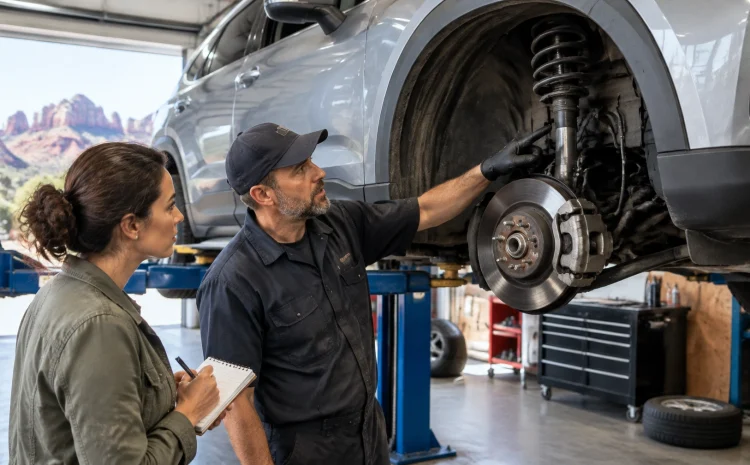
- Brakes: Have the pads and rotors examined for wear and condition. If you noticed squealing, grinding, vibration, or pulling during a test drive, describe exactly when it happened.
- Tires: Check tread condition and uneven wear, and ask about the tires’ age. Wear concentrated on one edge can point to alignment, inflation, suspension, or other issues that deserve a closer look.
- Battery and charging: Ask for the battery’s age, test result, and any relevant concerns. A car that starts today may still have a battery nearing the end of its useful life.
- Belts and hoses: Look for visible cracking, wear, soft spots, or other signs of deterioration. A belt or hose problem may be manageable, but it’s better to know before you buy.
- Warning lights and codes: Confirm whether warning lights are on and ask whether a diagnostic scan is available and appropriate. A scan is one useful clue, not a complete verdict on a car’s condition.
- Body and underbody: Look for inconsistent paint, mismatched panels, unusual gaps, or signs of previous repairs. Ask whether visible underbody areas show damage, leaks, or corrosion. In Sedona’s dusty conditions, dirt can also make it harder to spot seepage or distinguish normal dust from a fresh leak, so a careful look matters.
- Maintenance history: Ask what appears overdue based on the records and the manufacturer’s schedule. Dust, heat, and temperature swings around Sedona can make it especially sensible to ask about filters, battery condition, and aging rubber components.

An inspection should give you useful findings, not just a vague “looks good.” Ask what was checked, what couldn’t be checked, and which items need attention now versus later. If you have one particular worry (such as a vibration, a fluid smell, or a warning light) say so before the inspection begins.
Questions to ask the seller before booking
A straightforward seller should be able to answer reasonable questions, even if they don’t know every detail. Ask:
- How long have you owned the car, and why are you selling it?
- Are service receipts or maintenance records available?
- Has it had collision damage, bodywork, or major repairs?
- Are any warning lights on, or have any recently come on?
- Are there known leaks, noises, drivability issues, or repairs still needed?
- Will you allow an independent mechanic to inspect it before purchase?
For a dealer purchase, ask whether the vehicle’s inspection or reconditioning records are available. For a private sale, confirm that the seller is willing to let you arrange an independent check. In either case, review the title and paperwork carefully, and consider a vehicle-history report as a separate source of information. Neither paperwork nor a history report replaces a physical inspection. The Arizona Attorney General’s auto-purchase guidance also recommends having a trusted mechanic inspect a used vehicle before you buy.
Why choose the shop yourself?
The seller may suggest a shop they know. That may be convenient, but choosing an independent shop yourself gives you more control over who evaluates the car. You can explain your priorities directly, ask what the inspection includes, and receive findings from a business you selected, not one whose choice was made for you.
That doesn’t mean a seller’s preferred shop is automatically untrustworthy. It simply means the decision is yours. Look for a clear explanation of what was checked, what was outside the inspection’s scope, and what the findings mean for your decision.
Sedona Oil & Lube has served Sedona for over 30 years. Our approach is built on transparent recommendations: we’ll explain what we find and won’t turn a concern into a reason to push unnecessary work. If you’re comparing used cars, ask whether our 18-point inspection is a suitable starting point for the vehicle you’re considering and what specific areas you want us to look at closely. Our mechanical services page outlines the additional repair work we handle.
What if a private seller won’t allow a full inspection?
Sometimes a seller has a tight schedule or doesn’t want the car driven to a shop. Ask whether they’ll allow an inspection at the vehicle’s location, or agree on a shorter appointment with a mechanic. Be clear that you want an independent assessment before payment, and ask the shop what it can reasonably check under those conditions.
If the seller refuses any independent inspection, pressures you to pay immediately, or insists you accept their description without checking the car, take that seriously. You can walk away. A vehicle that seems like a bargain is not worth buying blind if the seller won’t give you a reasonable chance to assess it.
Red flags that may mean it’s time to walk away
One finding doesn’t automatically make a car a bad purchase; it may simply affect the price or require a repair plan. But pause if you encounter several unresolved concerns, or if the seller’s answers don’t line up with the vehicle’s condition. Examples include:
- The seller won’t allow an independent inspection.
- The title or vehicle identification details don’t match, or ownership paperwork is unclear.
- Warning lights remain on, or the seller can’t explain a significant symptom.
- There are signs of substantial collision repair, major leaks, or neglected maintenance that the seller didn’t disclose.
- The seller pressures you to decide before you can review the inspection findings.
Ask the mechanic to explain the severity and likely next steps, then decide whether the risks fit your budget. If a problem affects safety or the seller refuses to clarify a major concern, walking away may be the most cost-effective choice.
Know what an inspection can, and can’t, tell you
A pre-purchase inspection describes what could be assessed at that time. It may uncover visible wear or current problems, but it can’t predict every future failure. Intermittent issues may not appear during a short check, and some problems require more testing or disassembly than a standard inspection includes. An inspection is not a warranty or a promise that the vehicle will remain trouble-free.
That’s why it helps to ask for a clear scope and bring up your concerns in advance. If the findings identify repairs, get an explanation before deciding. You may use that information to negotiate, budget for maintenance, request further testing, or pass on the car.
A little due diligence is part of smart automotive maintenance in Sedona. It helps you understand the care a vehicle may need before it becomes yours. If you buy it, ask about the DuraMAX DOLLAR$ Program when you’re planning future service; eligibility and savings depend on current terms, so confirm details with the shop.
Make your decision with clearer information
The right used car should fit your needs, your budget, and your comfort with its condition. A thoughtful inspection won’t remove every uncertainty, but it can reveal important questions before you commit, and help you avoid taking on surprises you weren’t prepared for.
For a vehicle inspection in Sedona, AZ, contact Sedona Oil & Lube to discuss the car and what you’d like checked. Call (928) 977-8005 or visit us at 2745 AZ-89A, Sedona, AZ 86336. Get a clearer view of the vehicle’s condition before you buy, so you can make your next move with more confidence, safety, and peace of mind.